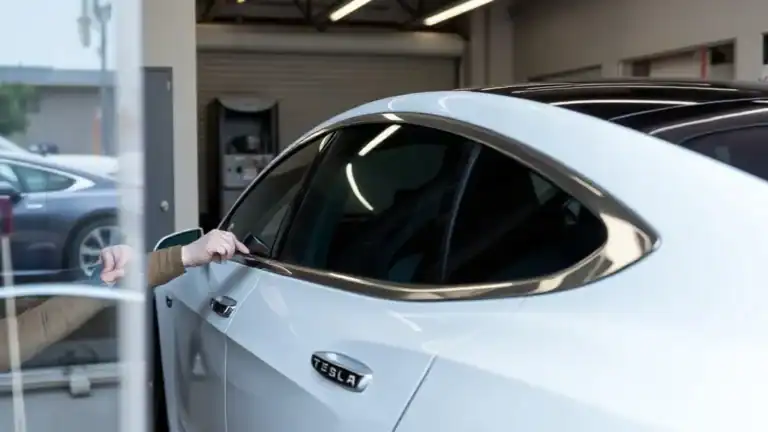
Tint City Inc. has been installing car window tinting across the Inland Empire since 1991, and one of the fastest-growing segments on our install schedule is the Tesla — Model 3, Model Y, and Model S — alongside Rivians, Ioniq 5s, and other electric vehicles Inland Empire drivers are choosing in growing numbers. The right automotive window tinting on an EV is not simply about appearance. It is a practical thermal management upgrade that affects cabin comfort, interior longevity, and how efficiently your battery handles a Southern California summer.
Considering window tinting for your Tesla or electric vehicle?
Contact Tint City Inc. at (800) 468-7244 for a no-obligation consultation and free estimate — four Inland Empire locations, open Monday through Saturday.

Why Tesla and EV Glass Demands a Different Approach
Tesla and modern EVs use large glass panels — panoramic roofs and frameless door glass — that expose the cabin to far more direct solar energy than a conventional vehicle with a standard metal roofline. On a summer afternoon in Rancho Cucamonga or Loma Linda, an untinted EV parked in direct sun builds interior heat faster than most drivers expect. The core issue is that in an electric vehicle, air conditioning draws from the same battery pack that moves the car. Every degree of radiant heat entering through unprotected glass forces the climate control system to work harder, spending kilowatts that would otherwise extend your driving range. Car window tinting addresses this at the source — reducing how much thermal energy enters the cabin before the battery has to compensate for it.

Solar Gard Ceramic Film: Heat Rejection, UV Protection, and Range
Ceramic window film from a non-metallic product line reduces both infrared heat entering your cabin and UV radiation that damages EV interiors — without interfering with the electronic systems modern electric vehicles depend on. Solar Gard’s XenithIR ceramic series blocks up to 93% of infrared heat and more than 99% of harmful UV rays; the VortexIR ceramic series rejects up to 88% of infrared heat with the same UV protection and signal-safe non-metallic construction — both available through Tint City as part of the full Solar Gard automotive window tint lineup. Less infrared entering through the glass means your cabin heats more slowly, the air conditioning runs shorter cycles, and every kilowatt saved on cooling stays available for driving range. The UV protection matters separately: dashboards and large touchscreens in EVs parked in Southern California sun degrade faster than most owners realize. Tint City holds Solar Gard SELECT SHOP status — an exclusive designation for top-tier installers with access to the full ceramic lineup and ongoing manufacturer training — so we match the right product to each window position on your specific EV rather than defaulting to a single shade across the vehicle.
California Tint Law: What Tesla and EV Owners Need to Know
Under California Vehicle Code Section 26708, front side windows on all vehicles — including Tesla and other EVs — must maintain a combined visible light transmission of at least 70% VLT after film is applied. Because Tesla factory glass already transmits some light, the practical recommendation for front windows is ceramic film in the 80% to 90% VLT range, which keeps the combined measurement above the legal threshold while still providing meaningful heat and UV rejection. Rear windows and the panoramic glass behind the front seats can be tinted to any shade under California law — that is where most of the visible privacy and heat-rejection benefit comes from on a Tesla. Tint City has been current on California tint law since 1991, and our team meters every install to confirm compliance before the vehicle leaves the shop. For a complete breakdown of the state’s requirements, see our California Window Tint Laws guide.
Cameras, Sensors, and Why Signal-Safe Film Matters
Professionally installed ceramic window film from a signal-safe product line does not interfere with Tesla’s autopilot cameras, parking sensors, or any of the wireless systems an EV relies on daily. After 35 years fitting window film on every category of vehicle that comes through the Inland Empire, the question we hear most often from Tesla and EV owners is whether the film will block the cameras. The answer comes down to film construction — metallic and metalized films use metal layers that can interfere with wireless signals, while Solar Gard ceramic films use non-metallic nano-ceramic construction. The following systems pass through without interference:
- GPS navigation and real-time mapping
- Bluetooth connectivity and audio streaming
- Cellular signals for phone and data
- Tire Pressure Monitoring Systems (TPMS)
- Satellite radio reception
- Wireless charging pads built into EV center consoles
The consultation we run before every install includes a review of your vehicle’s camera and sensor positions so film placement accounts for each one. See how ceramic film compares to carbon and dyed window tint for a deeper look at the construction differences that matter for connected vehicles.
Why Inland Empire EV Owners Come to Tint City Inc.
Tint City Inc. has served Inland Empire vehicle owners since 1991 as a family-run Solar Gard SELECT SHOP with four locations across Rancho Cucamonga, Loma Linda, Corona, and San Dimas. More than 1,000 combined Yelp reviews across those locations reflect over three decades of straightforward installs, honest consultation, and turnaround customers consistently describe in hours rather than multi-day waits. For EV owners, that track record matters because modern electric vehicles require someone who has actually worked on them — who understands the glass geometry of a Model Y, the roof configuration of a Rivian, and the regulatory requirements that keep an Inland Empire Tesla driver compliant at a CHP stop on the I-15. If you drive an EV in San Bernardino, Riverside, or Los Angeles County and want a professional car window tinting consultation, stop by the nearest location or call for a free estimate.

Frequently Asked Questions
Will ceramic window tinting interfere with my Tesla’s autopilot cameras or sensors?
Ceramic window film does not interfere with Tesla’s cameras, autopilot sensors, or wireless systems when installed using non-metallic film constructions such as Solar Gard’s ceramic lineup. Non-metallic ceramic film allows GPS, Bluetooth, cellular signals, and TPMS sensors to pass through unobstructed. Metallic or metalized films are the type that create signal interference — which is one reason Solar Gard’s non-metallic ceramic films are the right match for Tesla and other modern connected EVs.
What is the darkest legal tint for Tesla front windows in California?
Under California Vehicle Code Section 26708, front side windows on all vehicles — including Tesla — must allow at least 70% visible light transmission (VLT) as measured on the combined glass and film. Because factory glass already reduces some light, the practical recommendation for front windows is ceramic film rated 80% VLT or higher to ensure the combined reading stays above the legal threshold. Rear windows and panoramic roof glass behind the front seats can be tinted to any shade under California law.
Does window tinting actually help with EV battery range?
Ceramic window tinting reduces infrared heat entering the cabin, which lowers the temperature your EV’s air conditioning system must overcome. Because climate control draws directly from the drive battery, less AC demand translates to preserved driving range. The benefit is most noticeable on high-heat Inland Empire summer days when the AC would otherwise run continuously. Tinting does not eliminate climate control use, but it meaningfully reduces the thermal load the system has to manage.
Ready to schedule your EV window tinting appointment?
Call Tint City Inc. at (800) 468-7244 — free estimates at all four Inland Empire locations, Monday through Saturday 8am to 5pm.