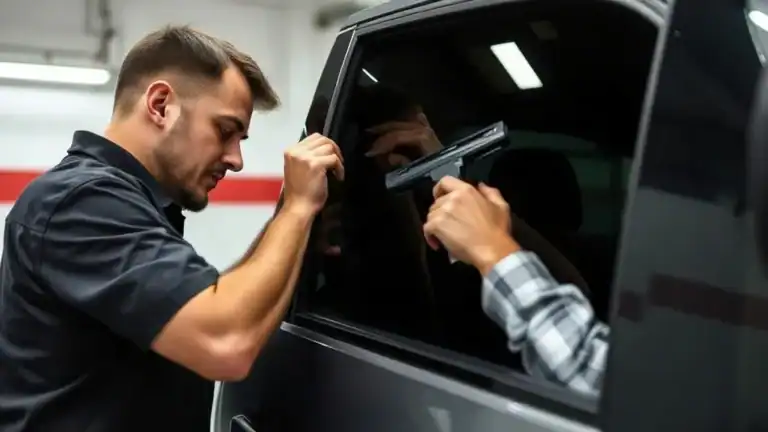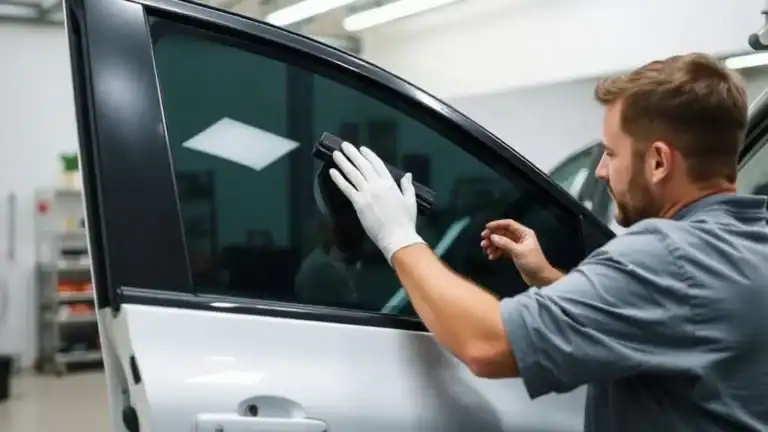
Tint City Inc has provided commercial window tinting service across the Inland Empire since 1991, and security window film is one of the most consequential conversations we have with business owners in Rancho Cucamonga, Loma Linda, Corona, and San Dimas. Storefront glass is the most accessible point of entry in most commercial buildings — and it is usually the least protected. Commercial security window film bonds a multi-layer polyester film to your existing glass, holding fractured panes in place under impact, resisting forced entry, and preventing glass fragments from becoming projectiles in a blast or severe weather event. This guide covers the four protection categories Tint City installs for Inland Empire businesses: forced entry resistance, blast mitigation, anti-graffiti film, and impact protection attachment systems.

Wondering which security film specification is right for your building?
Contact Tint City Inc at (800) 468-7244 for a no-obligation commercial security film assessment.
What Commercial Security Window Film Does
Commercial security window film is a multi-layer polyester laminate applied to existing glass that holds fractured panes together under impact, delays forced entry, and prevents glass fragments from becoming hazards in a blast event.
The film does not make glass unbreakable. What it changes is what happens after glass breaks. Without film, shattered glass produces loose shards that fall immediately into the occupied space or scatter as projectiles. With security film properly applied and anchored to the frame, fractured glass stays bonded to the film substrate and remains largely in place. That matters for three distinct scenarios facing Inland Empire businesses: a smash-and-grab attempt on a storefront along Haven Avenue or the Foothill Boulevard corridor, a low-probability but high-consequence blast event near a government or medical facility, and recurring graffiti and scratch vandalism that makes ground-floor glass a repeated maintenance cost. Each scenario calls for a different film specification — and in security applications, the attachment method is as critical as the film itself.
| Film Type | Primary Threat | Attachment Required | Common Applications |
|---|---|---|---|
| Forced Entry Film | Smash-and-grab break-in | Recommended for sustained attacks | Retail storefronts, pharmacies, offices |
| Blast Mitigation Film | Explosion or pressure event | Required — wet-glaze perimeter system | Government, medical, institutional buildings |
| Anti-Graffiti Film | Scratching, etching, tagging | Not required — sacrificial layer | Ground-floor retail, transit stops, restrooms |

Forced Entry Resistance and Break-In Prevention
Security window film delays forced entry by converting standard glass into a fragment-retention barrier — the pane fractures on impact but stays bonded to the film, requiring attackers to spend significantly more time breaching the opening than bare glass allows.
The smash-and-grab burglary model depends on speed. The attacker breaks the window cleanly, reaches through for merchandise within seconds, and is gone before an alarm response arrives. Security film defeats that model by denying the clean opening. The glass fractures, but the film membrane holds the broken pane in place, requiring repeated strikes to create a passable gap — and that delay is what the film is engineered to produce. Independent testing under ASTM F1233 protocols demonstrates this resistance to multiple impact cycles, which translates directly to forced entry delay in real-world retail scenarios. For storefronts along the Foothill Boulevard corridor, the Haven Avenue commercial strip in Rancho Cucamonga, and retail locations near East Ontario Avenue in Corona, Tint City’s commercial window tinting service with security film is the most practical glass hardening measure available without a full glazing replacement.
Blast Mitigation and Impact Protection
Blast mitigation window film addresses a different physics problem than forced entry — an explosion loads the entire glazing unit simultaneously in milliseconds, and the film must hold fractured glass to its substrate and keep fragments out of the occupied space.
Most blast-related commercial building injuries result not from the pressure wave itself but from glass fragments entering the occupied space at velocity. Blast mitigation film holds the fractured glass to the film substrate and, when combined with an edge attachment system bonded to the frame, keeps the entire glass assembly largely in place under blast pressure. The applicable test standards are ASTM F1642 and the General Services Administration’s GSA TS01-2003 protocol, which rate glazing systems by how far fragments travel into a test room under a defined blast load. Solar Gard’s Armorcoat safety and security film line has been tested and certified across forced entry, blast, and seismic performance standards — the same product line Tint City installs as an authorized Solar Gard SELECT SHOP. Medical facilities, government offices, and institutional buildings near Redlands Boulevard in Loma Linda represent the accounts where blast mitigation film specifications come up most often in our commercial estimates. The U.S. Department of Homeland Security’s shatter-resistant window film market survey identifies ASTM F1642 and GSA TS01-2003 as the primary federal standards for this application category.
Anti-Graffiti Film for Inland Empire Storefronts
Anti-graffiti window film is a sacrificial clear layer applied to glass and smooth surfaces that absorbs scratching, etching, and tagging — when vandalism occurs, the damaged film is removed and replaced, leaving the original glass unharmed underneath.
The replace-not-repair model is what makes anti-graffiti film an operating budget item rather than a capital cost. A ground-floor storefront window that gets scratched or acid-etched once typically gets hit again. Without film, that means repeated glass replacement orders, glazier scheduling, and business disruption. With film in place, a technician removes the damaged layer and installs a fresh sheet — the glass underneath never accumulates damage. Solar Gard’s Graffitigard product line, available through Tint City as an authorized Solar Gard SELECT SHOP, is specifically engineered for this application: optically clear, colorless, and designed to come off cleanly without leaving adhesive residue on the substrate. We install it on retail storefronts, transit stops, restroom mirrors, elevator panels, and any smooth surface facing recurring vandalism risk. For property managers running multiple commercial locations across Rancho Cucamonga, San Dimas, and the Inland Empire commercial corridor, we can establish a maintenance schedule for film inspection and replacement so protection never becomes a reactive emergency.
The Attachment System: Why Installation Method Determines Performance
An impact protection attachment system mechanically bonds the security film edge to the window frame with structural silicone, ensuring that when glass fractures, the entire assembly stays in place rather than peeling away under impact or blast loading.
Film applied without edge attachment to the frame is the most common specification gap we see in commercial security film jobs. The film performs as a fragment-retention layer when glass breaks in an isolated impact, but under sustained forced entry — repeated strikes to the same location — or blast pressure loading, the film edge lifts off the frame and the assembly fails before the film substrate itself yields. The correct installation method seats the film edge close to the frame and applies a structural silicone bead along the perimeter to mechanically anchor the glass-and-film assembly. This edge anchoring step is documented in both the ASTM F1642 blast performance protocol and ASTM F588 forced entry test standard as the distinction between a compliant security glazing system and a standard window film install. Tint City’s commercial team assesses frame condition before specifying an attachment system to ensure the frame can support the load the system is designed to transfer.
What We See Most in Inland Empire Commercial Security Film Jobs
After over 30 years handling commercial window film across San Bernardino, Riverside, and Los Angeles Counties, the question Inland Empire business owners underestimate most is not which film to specify — it is whether to include an attachment system.
Retail and medical accounts along the Haven Avenue corridor and Foothill Boulevard typically call us about break-in deterrence first. We walk them through the difference between a standard film install and a film-plus-attachment system, and we pull up the same ASTM test data that shows why the frame bond determines performance in a forced entry scenario. For properties where our Solar Gard SELECT SHOP relationship gives us access to the full Armorcoat line — from basic fragment-retention films to the thicker security grades tested to blast standards — we match the spec to the actual threat profile, not to the least expensive option. Tint City also installs anti-graffiti film and daylight redirecting film that pushes up to 80% of incoming light deeper into a property, complementing security work with energy and maintenance benefits for the same commercial accounts. With commercial window tinting that reduces energy costs as well as security risk, one call covers a comprehensive commercial film assessment across all four Inland Empire locations.
Across more than 1,000 positive combined Yelp reviews at our four locations, the commercial accounts that call back — and they do — are the ones where we took the time to explain the system rather than just sell the film.

Frequently Asked Questions About Commercial Security Window Film
Does security window film prevent break-ins?
Security window film does not prevent glass from breaking, but it delays forced entry by holding fractured glass in place and requiring attackers to spend significantly more time creating a passable opening. For retail smash-and-grab scenarios, that delay — combined with an alarm response — is what the film is engineered to produce. Film works best as part of a layered security approach alongside alarms, lighting, and access control rather than as a standalone deterrent.
What is an impact protection attachment system and do I need one?
An impact protection attachment system is a structural silicone bead applied along the film perimeter that mechanically bonds the film edge to the window frame, preventing the film from peeling away under sustained impact or blast loading. For forced entry applications, an attachment system is recommended when the building faces repeated or sustained attack risk. For blast mitigation, an anchored perimeter system is required — film alone will peel from the frame under blast pressure, negating the fragment-retention benefit entirely.
Can commercial security window film also reject heat and UV?
Yes. Solar Gard Armorcoat security films block greater than 99% of UV light and also provide solar heat rejection, reducing glare and heat gain as a secondary benefit alongside impact resistance. For businesses where security and energy performance both matter — offices, medical suites, and retail spaces with large south- or west-facing glass — security film can address both concerns in a single installation. Learn more about how commercial window tinting reduces energy costs for Inland Empire businesses.
How is anti-graffiti film replaced after vandalism damage?
When vandalism occurs — scratching, acid etching, or tagging — the damaged anti-graffiti film is peeled away from the glass and a fresh layer is installed. The process typically takes a few hours for a standard storefront and does not require the business to close. Because the film uses a removable adhesive, the original glass underneath remains undamaged and in original condition. Tint City can establish a maintenance schedule for recurring film inspection and replacement across multi-location commercial accounts in Rancho Cucamonga, Loma Linda, Corona, and San Dimas.
Ready to protect your Inland Empire business with the right commercial security window film?
Call Tint City Inc at (800) 468-7244 Monday through Saturday, 8 a.m. to 5 p.m., to schedule your free commercial security film assessment.